Graphite became popular in England in 1564, and soon after, manufacturers encased the soft material in wood for easier use. Today, pencils remain vital for creativity and precision, whether used for sketching, writing, drawing, or measuring.
However, not all pencils perform the same way. Each lead is a unique, non-toxic blend of graphite and clay, resulting in a variety of pencil lead grades suitable for different tasks.
Let’s explore how the pencil industry grades pencil leads and which grades work best for specific uses.
Pencil lead hardness scales
When browsing pencils, the numbers and letters on each one can seem puzzling. The phrase “2B or not 2B?” isn’t only a Shakespearean pun — it’s a real consideration. Understanding how pencil lead grades work helps you select the right pencil for your needs.
The HB grading scale
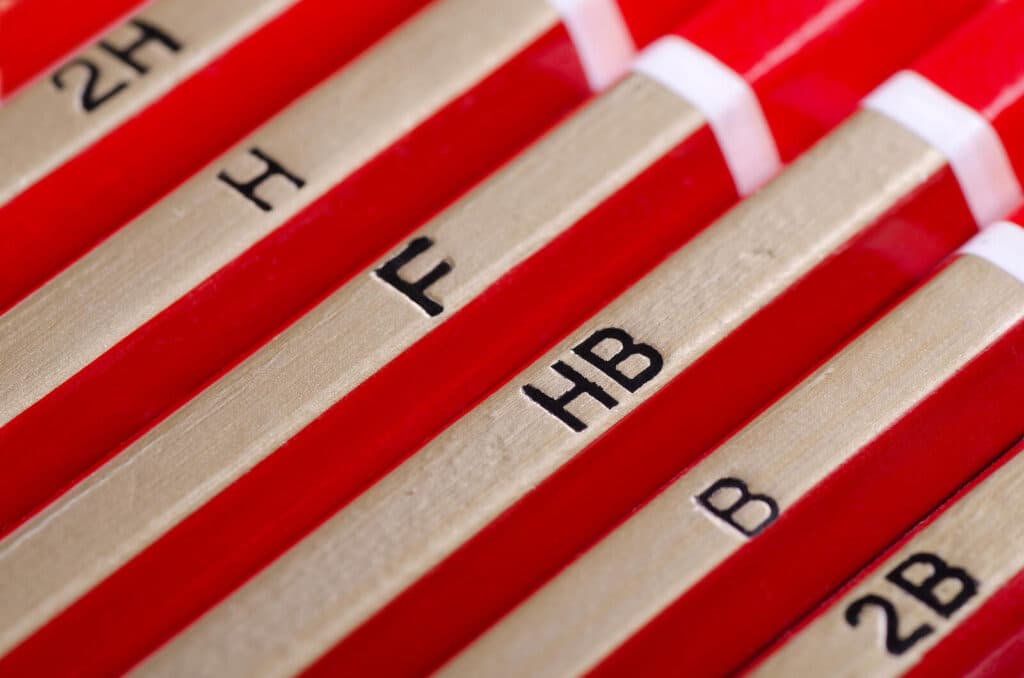
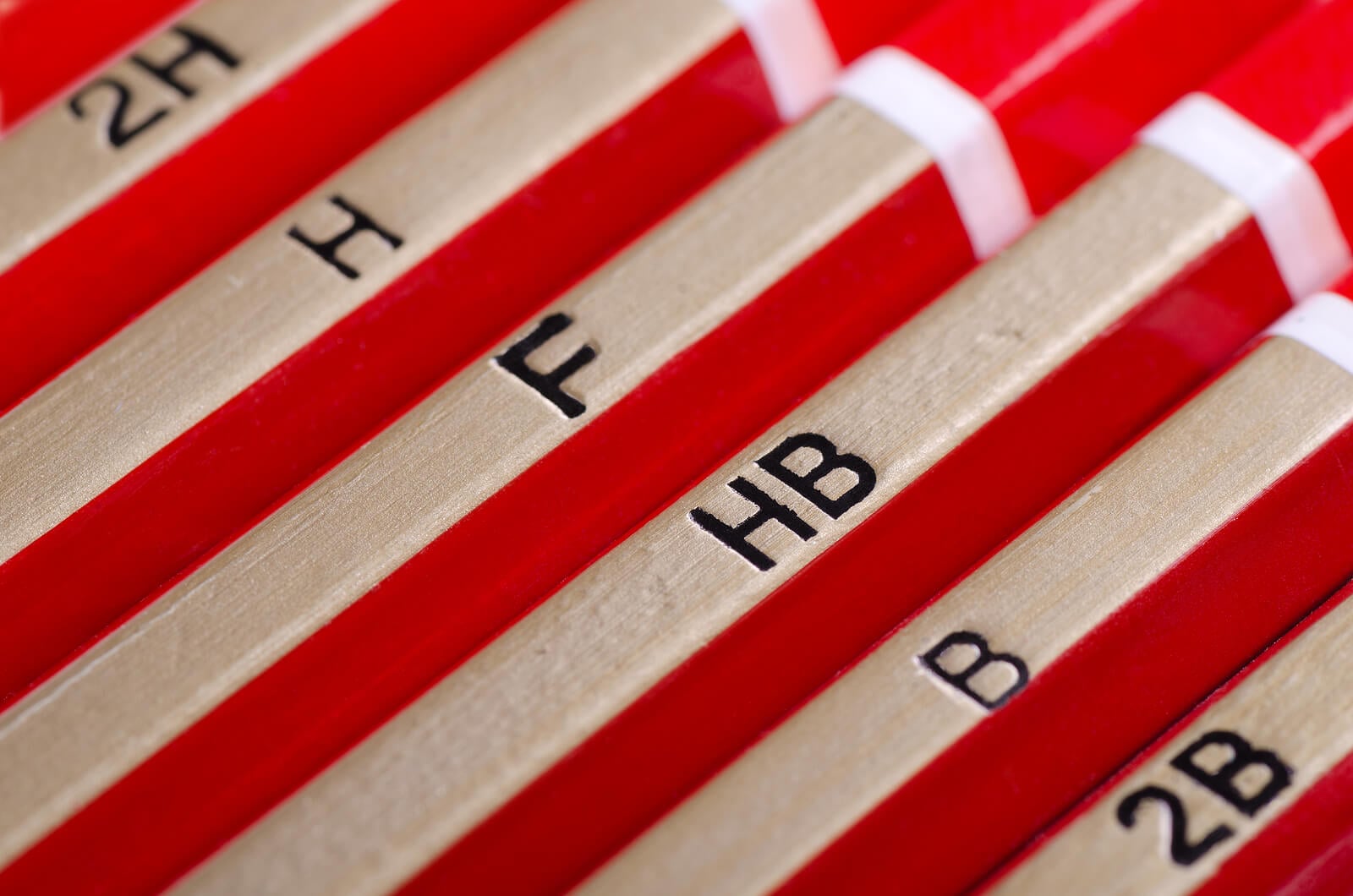
In the UK and across Europe, pencils follow the HB grading system. Because the industry lacks a universal standard, lead grades vary among manufacturers. But the scale still provides valuable guidance.
The grading system uses three main letters: H, B, and F. Numbers often precede these letters to show differences in hardness and blackness.
- H (Hardness): H leads contain more clay, making them hard and ideal for precise, light lines. These leads resist smudging and are suitable for technical drawings and fine details.
- B (Blackness): B leads have less clay, creating bold, dark lines. Artists use them for shading and expressive sketches.
- HB (Hardness & Blackness): HB pencils sit in the middle of the scale. They balance hardness and blackness, making them a popular choice for everyday writing and sketching. They’re particularly popular among schoolchildren learning to write.
- F (Fine): F pencils sharpen to a fine point, sitting between HB and H in hardness. Not all manufacturers include this grade, and no numbers accompany this letter.
Pencil lead combinations
Many pencils combine letters and numbers for more precise grading. The scale typically ranges from 9H, which is the hardest and lightest, to 9B, the softest and darkest, with HB positioned at the centre. Most people use grades in the middle of the scale, while the extremes — like the brittle 9H or the crumbly 9B — serve specialised needs.
For example:
- 4H lead: A hard lead that creates light, crisp marks, making it ideal for architectural drawing, outlining, and intricate details. It resists smudging.
- 7B lead: A very soft lead that produces deep, rich strokes, perfect for shading. It glides effortlessly for quick, heavy lines.
Some manufacturers offer a limited selection of lead grades, but specialist art brands provide a comprehensive range of options. You can search for pencils by lead grade on our website.
The Faber-Castell Goldfaber 1221 graphite pencil is available in grades ranging from 6B to 4H. It has a break-resistant lead made with SV technology. Staedtler’s Tradition pencil offers a similar range, while the Mars Lumograph series covers all 22 grades.
The numerical grading scale
American manufacturers use the HB grading system for art pencils. For office pencils, brands use numbers to indicate the hardness of the lead. In this system:
- a higher number means a harder lead, producing lighter marks
- a lower number indicates a softer lead, making darker strokes.
This scale is more straightforward than the HB system, as office use doesn’t need as many variations:
- A #1 pencil is like a 2B.
- A #2 pencil is equal to an HB.
- A #3 pencil behaves like a 2H.
Most brands also offer half sizes.
Choosing the ideal pencil
Choose from wood-case pencils with the perfect lead grade or mechanical pencils, where you need to consider the lead width instead.
Wood-case pencils
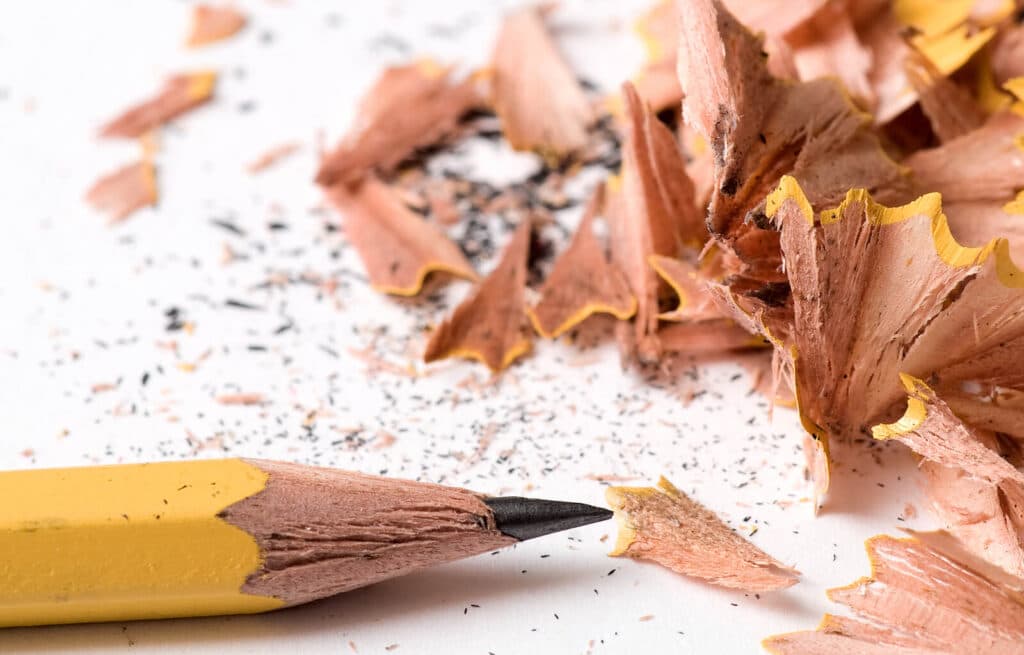
These classic pencils feature a graphite core in a wooden barrel, often crafted from renewable cedar. They’re available with a choice of lead grades and provide a natural, comfortable feel, are easy to sharpen, and offer versatility. Additionally, they’re affordable and have a lovely scent when sharpened.
Mechanical pencils
Mechanical pencils offer precision and convenience, eliminating the need for sharpening. They come in two main types:
- Clutch pencils: These hold a single piece of lead, released by pressing a button. Artists, designers, and engineers use them for controlled, consistent lines.
- Propelling pencils: This type of pencil extends the lead in small amounts with a twist or click mechanism, preventing it from falling out. Many feature guide tubes to reduce lead breakage.
Selecting the right lead width
These pencils use different lead widths, each suited to specific tasks. However, not every pencil works with all widths, so choosing the right size ensures smooth performance without breakage or instability.
Check which lead widths a mechanical pencil supports before buying to ensure compatibility. If you already own one, use only the correct width to prevent wobbling or snapping. When a project requires a width your pencil doesn’t support, you’ll need to buy a second pencil.
Refer to our quick guide for the best size to pick:
- 0.3 mm lead width: Best for detailed line work and technical drawings.
- 0.5 mm–0.7 mm lead width: A popular choice for general writing and sketching.
- 0.9 mm+ lead width: Thicker leads that are great for bold strokes, shading, and expressive art.
The right pencil enhances workflow and creativity. Whether you need precise technical lines or deep, dynamic shading, the right combination of pencil and lead makes all the difference.