
Sheaffer pens, recognisable by their iconic white dot, are symbols of precision, innovation, and craftsmanship. For more than a century, Sheaffer has earned the trust of writers around the world. The company’s unique designs and engineering successes stem from its founder, Walter A. Sheaffer, and the team he built in Fort Madison, Iowa, in the early 1900s.
Join us as we explore the history of Sheaffer — its pioneering spirit and the ingenious inventions that shaped writing as we know it.
The history of the Sheaffer Pen Corporation
Walter A. Sheaffer began his career as a jeweller’s apprentice, helping his father in the family shop after leaving school. Repairing watches and setting gemstones sharpened his attention to detail and sparked his interest in mechanical design. In the quiet back room of that Iowa jewellery store, Walter began experimenting with fountain pen mechanisms.
By 1912, he owned a jewellery store in Fort Madison and invested his life savings to found the Sheaffer Pen Company there. He had seven employees, and they all pursued Walter’s idea for a lever-filling fountain pen. It was a cleaner and more reliable option than the eyedropper pens of the time, and Walter knew it would be popular.
A year later, the Sheaffer Pen Corporation was officially incorporated, and Walter’s dream entered full production.
By the 1930s, pen lovers celebrated Sheaffer pens for their ingenuity. The brand advertised its bestseller, and the advert said the pen: “filled instantly from any inkwell, with one touch of a finger. Cleans automatically when filling.”
At its height, Sheaffer became Fort Madison’s largest employer, sustaining generations of local families. The company even funded the Sheaffer Memorial Golf Course, an 18-hole course that opened in 1962 as a civic gift to the community.
More than a century later, Sheaffer continues to produce fine writing instruments built on that same commitment to quality, design, and precision.
Walter A. Sheaffer
Learn about Sheaffer’s founder in this fascinating video that includes interviews with former employees:
Sheaffer’s innovations
Few pen makers have contributed as much to writing instrument evolution as Sheaffer. The company’s inventive designs have always combined form and function and its influence persists today.
The Triumph nib
Sheaffer launched the Triumph nib in 1942. Tubular and seamlessly fused into the pen’s body, it featured a turned-up tip — a style sometimes known as a Waverley nib. This shape was intended to be stronger and allowed smooth writing at various angles, as well as ultra-fine lines when used upside down. The Triumph’s distinctive silhouette remains a hallmark of Sheaffer’s mid-century engineering, although the line only ran until 1948.
Feather Touch ballpoint pen refills
Sheaffer’s Feather Touch ballpoint refills, launched in the mid-1940s, provided smooth ink flow with little pressure. This design reduced fatigue during extended writing sessions.
The Touchdown filling mechanism
Sheaffer launched the Touchdown system for its premium pens in 1949 — a clever and easy air-pressure filling method. To fill, the writer unscrewed the blind cap, pulled out the plunger, dipped the nib into ink, and pressed the plunger down. Inside, a rubber sac compressed and expanded, drawing ink into the pen cleanly and efficiently.
The system’s reliability and feel made it a favourite for enthusiasts who appreciated clever mechanics as much as smooth writing.
The Snorkel filling mechanism
If the Touchdown was clever, the Snorkel was genius. Launched in 1952, this mechanism refined the Touchdown system. It added a slender retractable tube that extended beyond the nib. This meant writers could fill their pens without submerging the nib — a “no-dunk” method that kept the nib and fingers spotless.
The Snorkel combined intricate engineering with effortless practicality, and many examples still function well today. Its use in the elegant Thin Model (TM) pens and the robust Pen for Men (PFM) range helped define Sheaffer’s golden age.
The inlaid nib
Introduced in 1959, the inlaid nib broke from convention. Sheaffer didn’t hide the nib’s base in the grip like other brands. Instead, it built the base into the section, creating a sleek diamond shape that quickly became iconic. This design looked striking, with a stabilised ink flow, reduced flexing, and increased durability. Even now, collectors regard the inlaid nib as one of Sheaffer’s finest technical and aesthetic achievements.
Ink cartridges
Sheaffer also pioneered the ink cartridge at a similar time to several other brands, embracing convenience without sacrificing performance. Even dedicated bottled-ink fans saw the benefits of a clean, portable refill system — it reduced spills and made writing easier.
Who owns Sheaffer pens?
In 2022, William Penn Private Limited, a top luxury writing brand in Bangalore, acquired Sheaffer. The managing director said they became “guardians of a legacy” and pledged to honour Walter Sheaffer’s original vision.
Before that, the brand passed through several hands. A.T. Cross Company acquired it in 2014, and Société Bic S.A. owned it from 1997, after purchasing the company from its original family-led organisation. At the time of the original sale, Sheaffer employed around 550 people, most based in North America.
Where are Sheaffer products made?
After many years of production, Sheaffer closed its original Iowa factory in 2008. Administration moved to Eastern Europe, and Sheaffer produces most of its pens and inks in China, adhering to the brand’s long-established standards of precision and quality. Previous batches of Sheaffer ink were manufactured in Slovenia.
Explore Sheaffer products with The Pen Company
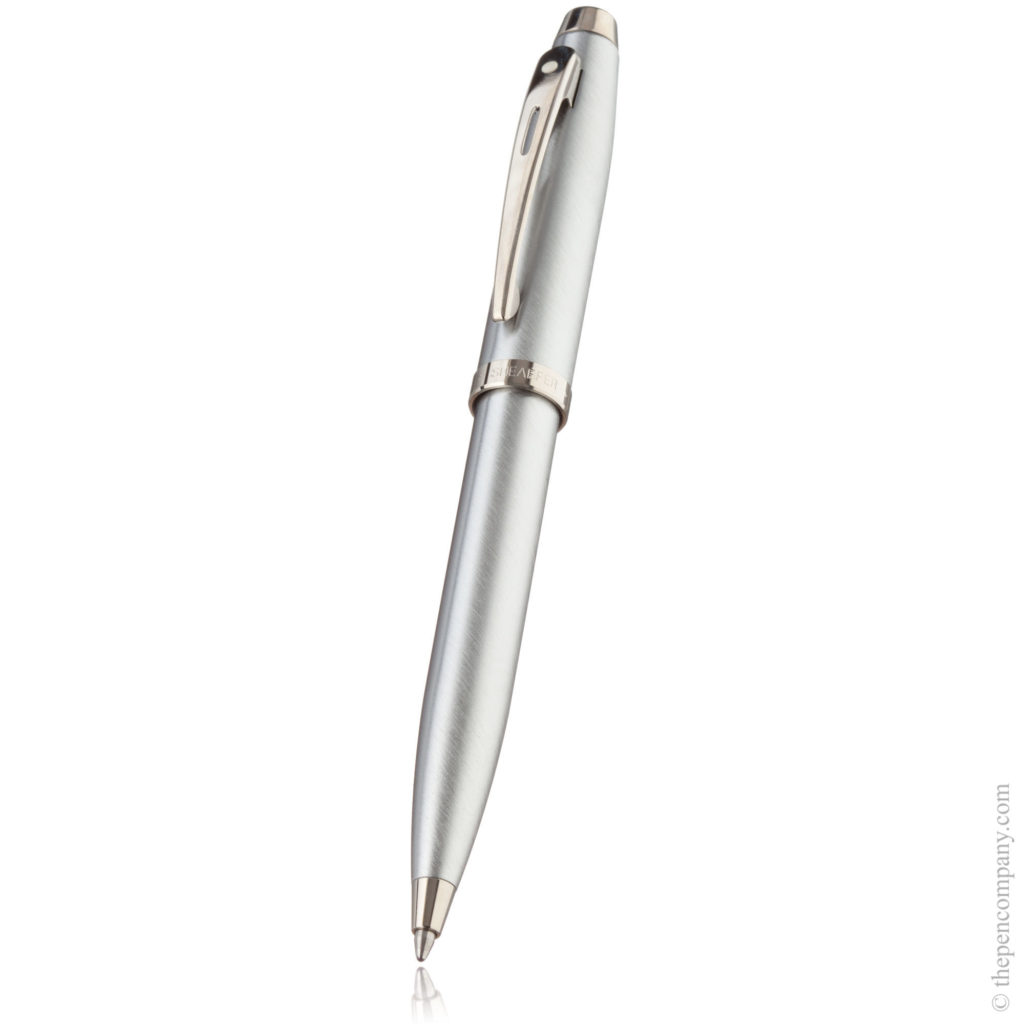
We’re proud to stock a wide range of Sheaffer pens and accessories — from the Sheaffer 100 rollerball and Sheaffer 300 fountain pen to the VFM rollerball and classic Skrip bottled ink.
Browse our full selection and own a piece of American pen-making history.